




To create an invoice manually in WordPress, install the free Flexible PDF Invoices plugin and go to Invoices → Add New. You fill in four sections: seller details, which you set once in the settings so they appear automatically, customer details, which can be fetched from an existing client, the product lines with their tax rates, and the payment information and dates. Click Publish and the PDF is ready to download or email. The same form works for a WooCommerce order, except the customer and product data is already filled in, so issuing takes one click. This guide walks through every field.
- How to create PDF invoices in WordPress
- Issue and send a manual invoice in WooCommerce with a free plugin
- When to stop issuing invoices by hand
- Flexible PDF Invoices plugin in your language
- Frequently asked questions
How to create an invoice in WordPress?
This is the route for a sale that never went through a shopping cart: an agreement made over email, a contact form, or a phone call. There is no order to read data from, so you enter everything yourself.
1. Install Flexible PDF Invoices plugin
Install and activate the Flexible Invoices for WooCommerce & WordPress plugin.
2. Add New Invoice in WordPress
Go to the Invoices tab in the left admin menu. Hover over it and the plugin menu expands. To issue a document from scratch, select Add New.
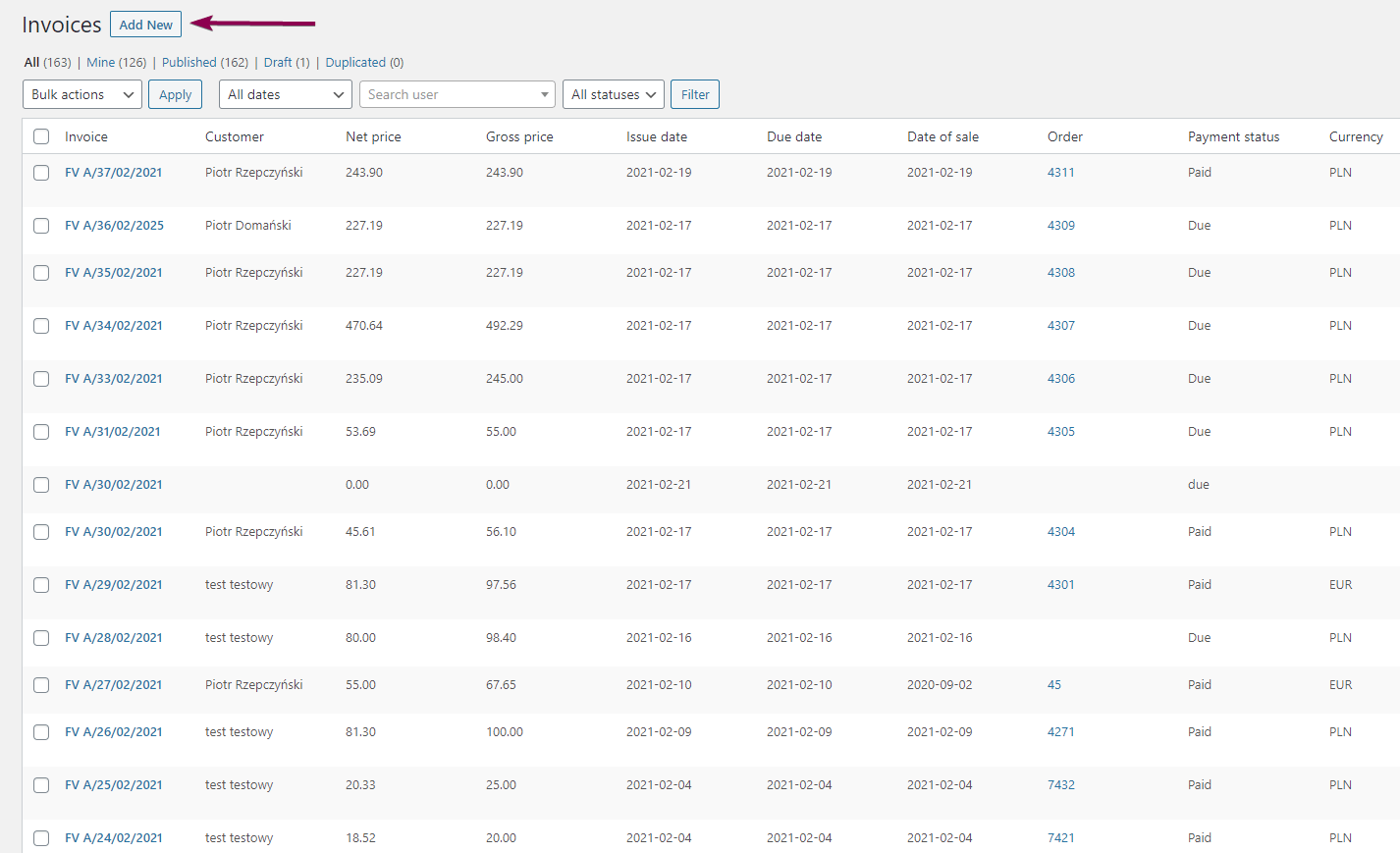
You can also open All Invoices, which lists every PDF invoice, and use the Add New button at the top.
3. Fill in the seller data
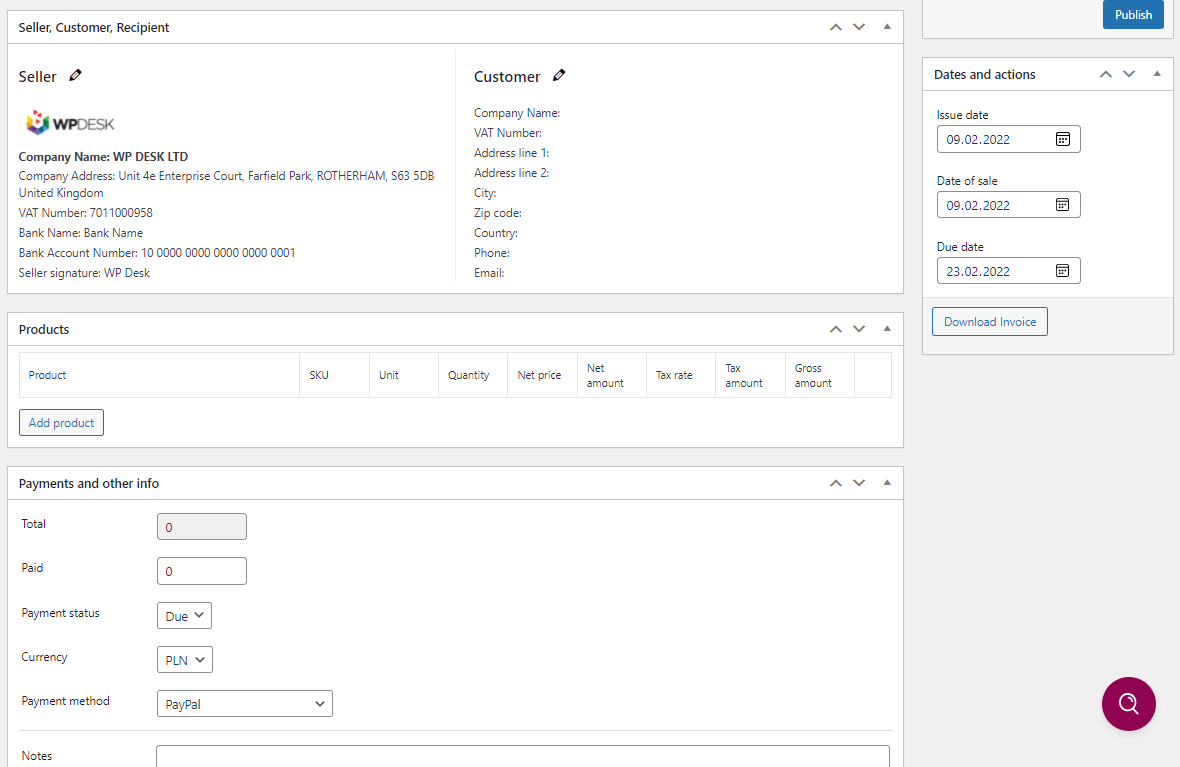
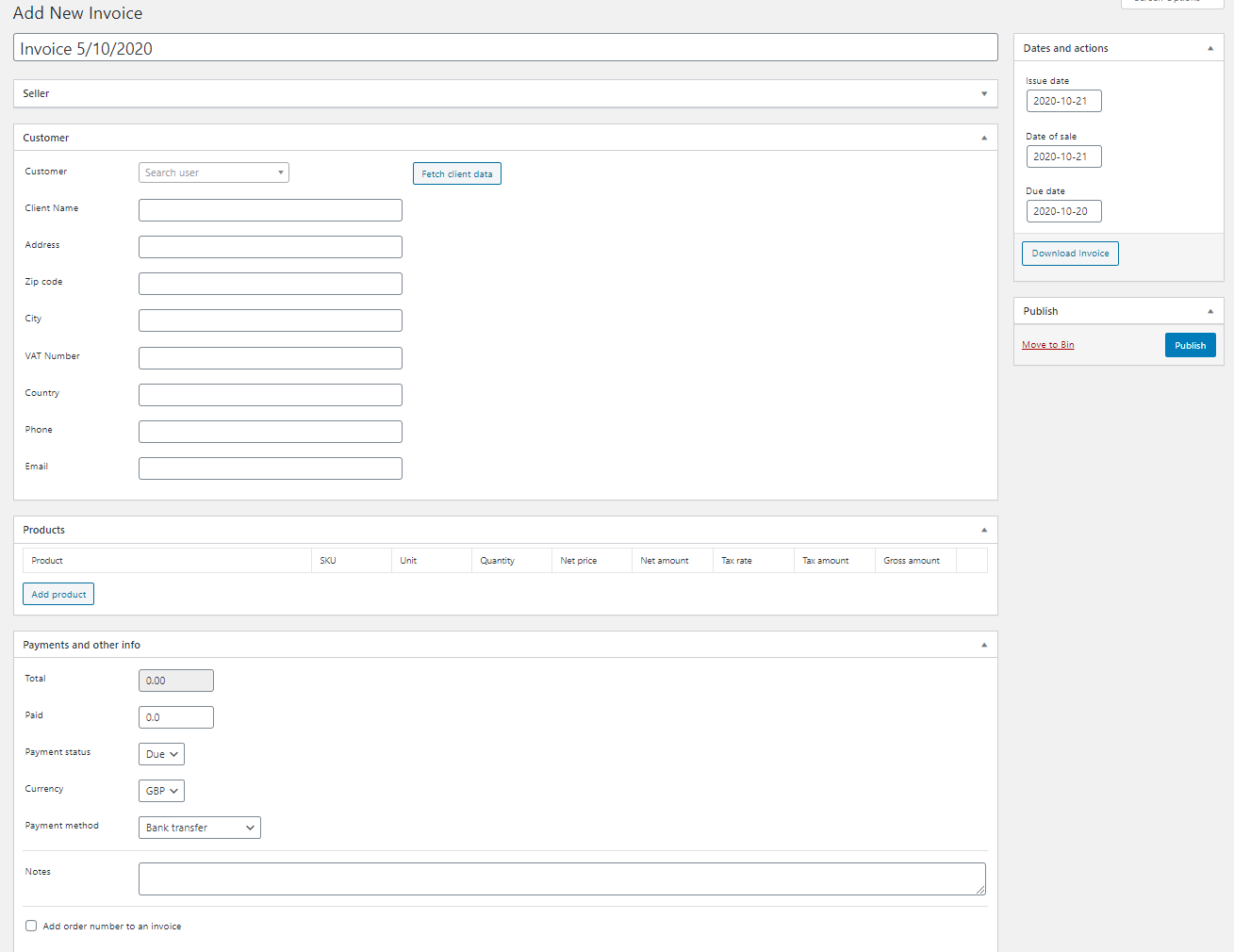
The first section is Seller. Set it once in the plugin settings, in the General tab, and it fills in automatically on every new document. Filling it in each time is possible but there is no reason to.
4. Customer data
In the Customer field you can search for clients already in the database. The Fetch client data button on the right pulls their details into the required fields, which is the main time saver when the same clients return.
For a new client, fill in the fields by hand: Client name, Address line 1, Address line 2, Zip code, City, VAT Number, Country, Phone and Email.
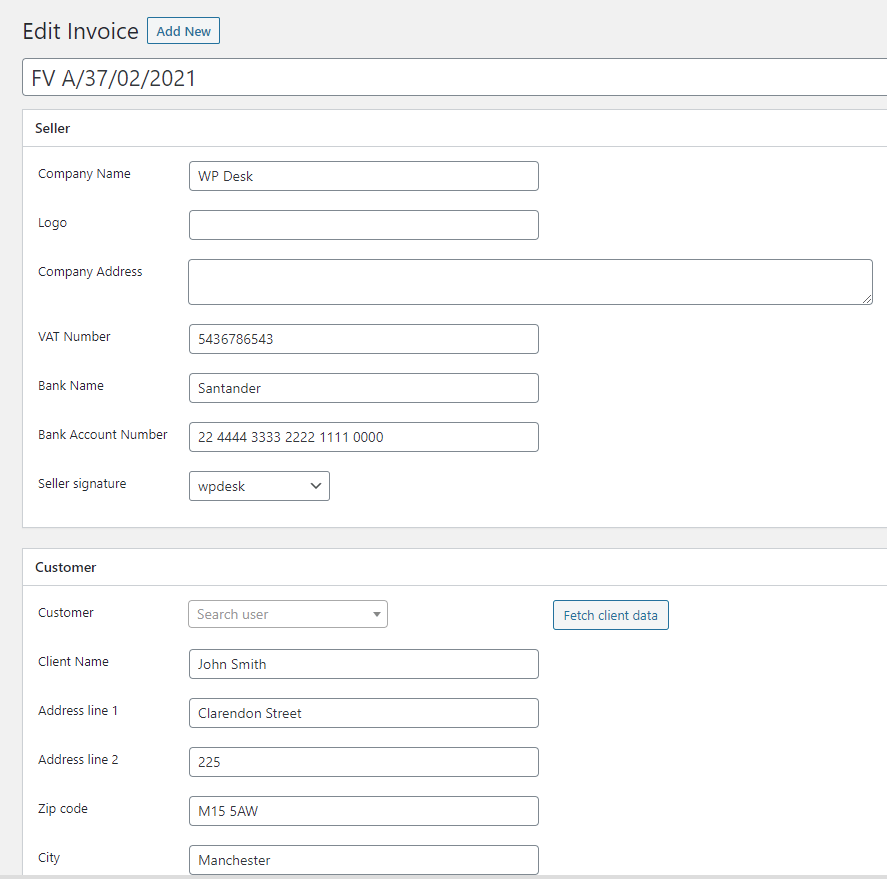
Note the VAT Number field. The manual form has one; the default WooCommerce checkout does not, which is why a B2B order placed through the store often arrives without the number you need.
5. Add products to the invoice
The Products table holds Product, SKU, Unit, Quantity, Net Price, Net Amount, Tax Rate, Tax Amount and Gross amount.
Below the table is the Add product button. Clicking it opens a search over your WooCommerce products: type three or more characters and the plugin finds them. The pencil symbol next to the product name field lets you type a name that does not exist in the catalogue, which is how you invoice a service.
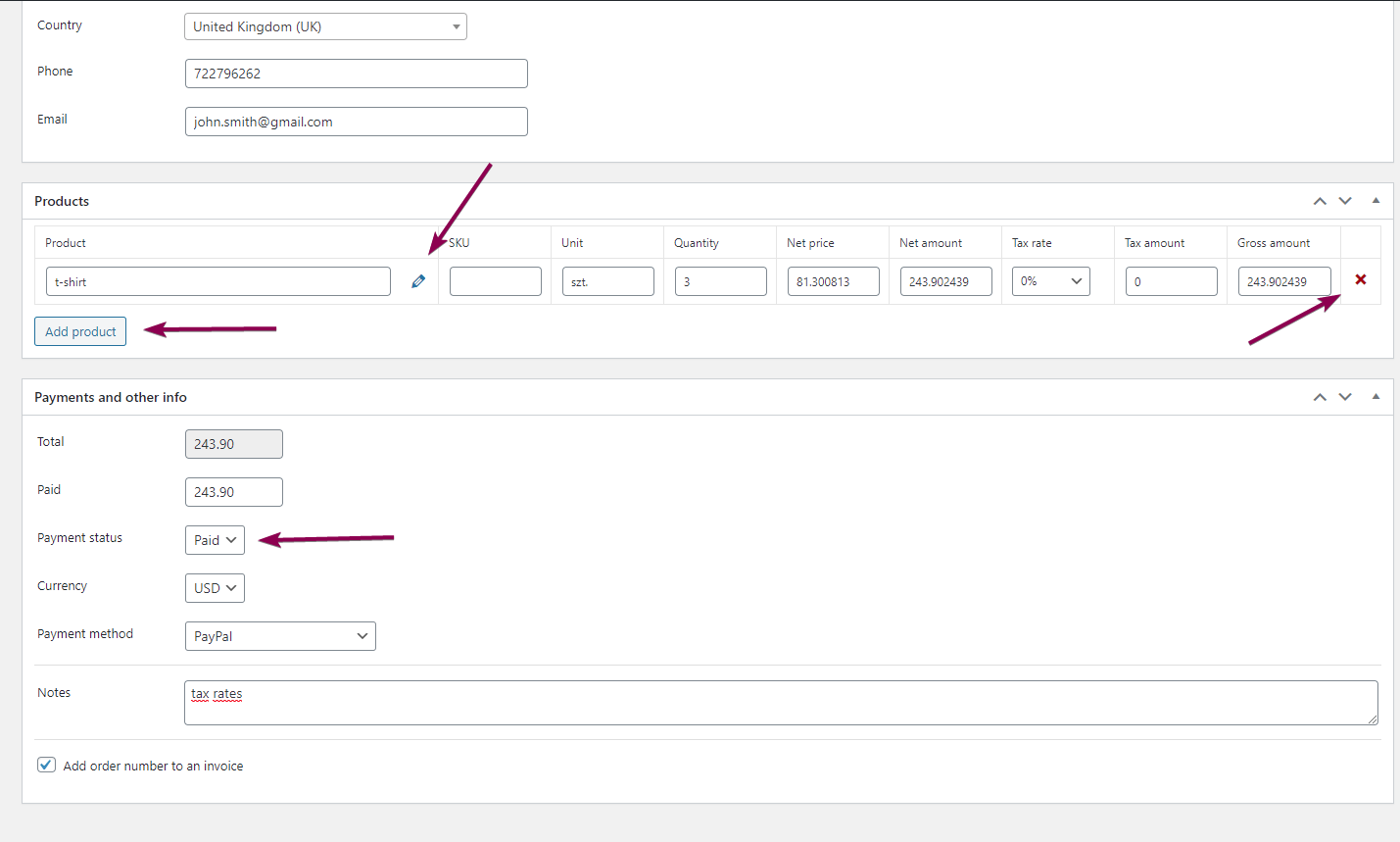
Once a product is in the table, every value is editable except one. Tax rate is a dropdown, filled from the rates defined in the plugin or taken from the WooCommerce tax settings. If the rate you need is missing, add it there first. Read more about setting WooCommerce taxes.
Added too many lines? The red cross on the right of the table removes them. And if the sale involves delivery, add shipping as its own line, with its own tax rate, before moving on.
6. Payment info and invoice notes
The Payment and other info section holds the total and the payment state. Set the invoice status to Paid or Due depending on whether the money has arrived, and fill the Paid field if it has.
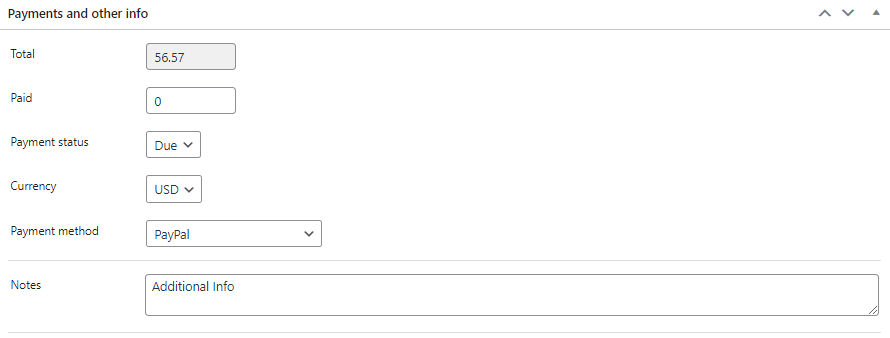
Here you also choose the currency and the payment method. Notes at the end of the section is where the order number, a tax annotation or any other remark goes.
7. Set the dates and publish
The Dates and Actions meta box holds the issue date, the sale date and the payment date, each with a calendar picker. Keep them accurate: the sale date and the issue date are not always the same day, and that difference matters to accounting.
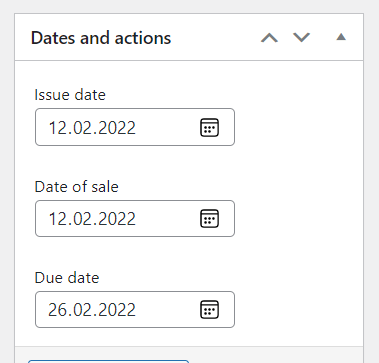
Then click Publish. The invoice is generated, takes its number from the series and appears on the list of all invoices. You can still correct it afterwards with the Update button, which replaces Publish, but only until it has been sent to the customer. After that, a correction document is the right route.

The document is ready. Use Download Invoice to get the PDF, and send it to the customer from the invoice edit screen.
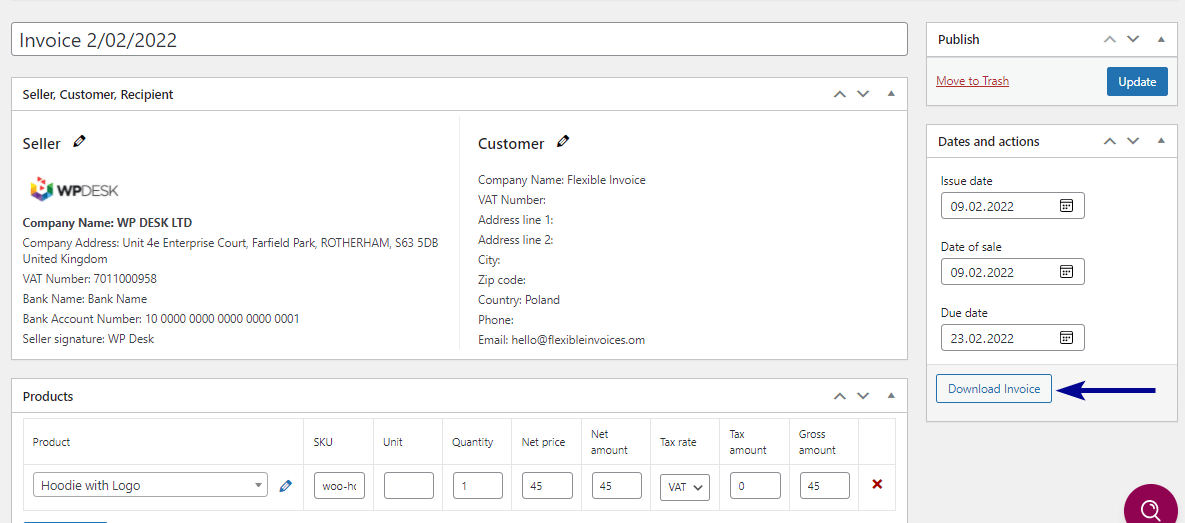
The same actions are on the All Invoices page:
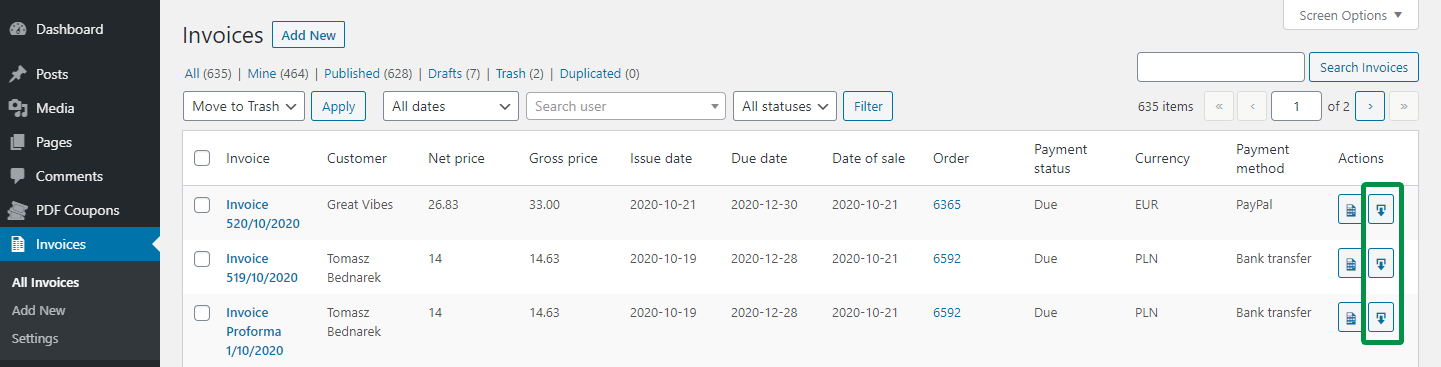
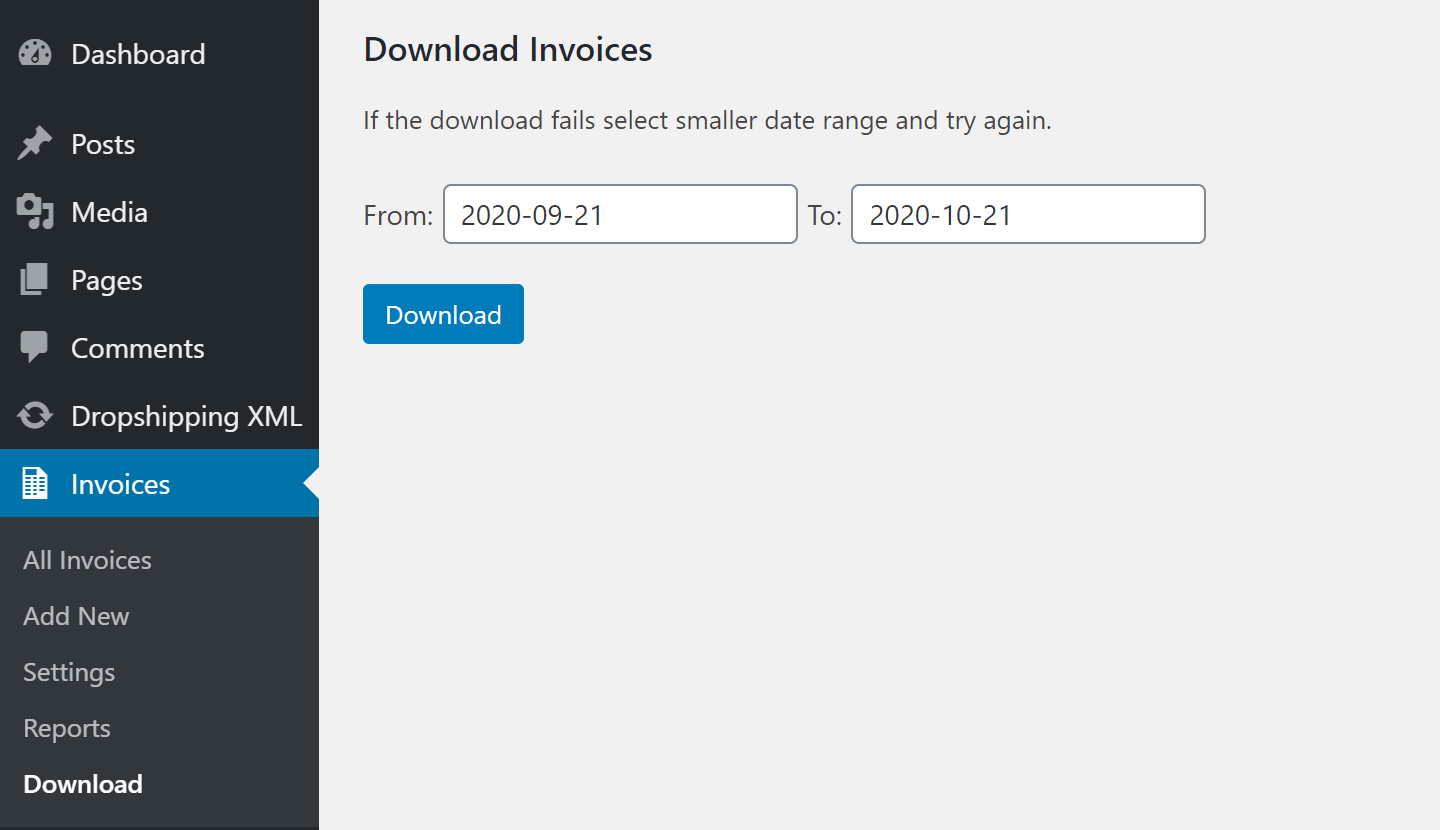
For several documents at once, use Invoices → Download, which exports a date range in one go. This is the submenu to remember at month end, when the accountant asks for everything from the period.
How to create and send a manual invoice in WooCommerce?
With a store running, the seven steps above collapse into one. The customer filled in their own data at checkout, the products are on the order, and the tax has already been calculated.
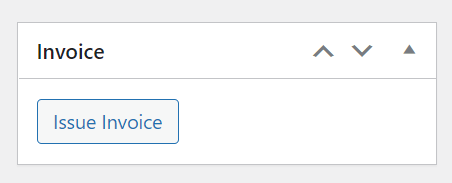
Open the order, find the Invoice meta box and click Issue Invoice.
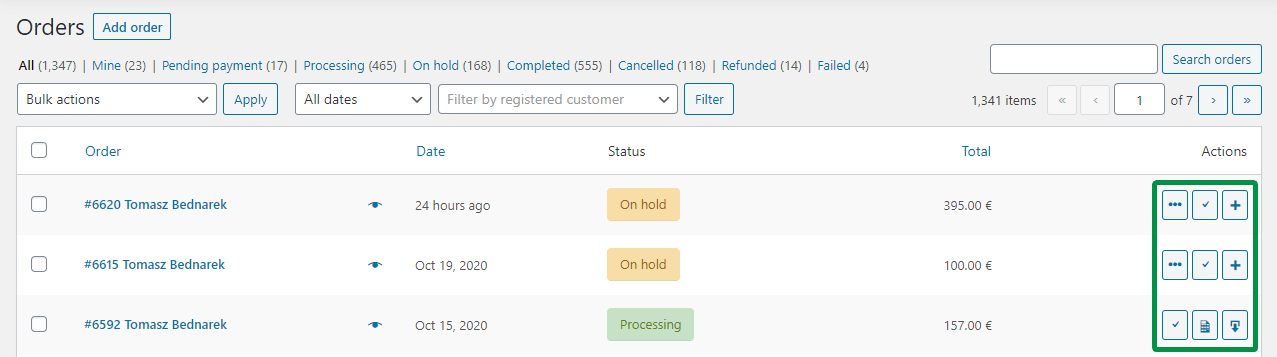
The same action is available straight from the Orders list, which is faster when you are issuing several:
And the issued document can be edited afterwards exactly like a manual one:
Both routes write into the same numbered series, so an invoice issued from an order and one typed by hand for a phone sale never collide.
When to stop issuing invoices by hand
Manual issuing is fine at a few documents a month. The moment it stops being fine is recognisable: a Sunday evening with 250 orders waiting, and a choice between spending the evening on it or pushing it to Monday.
That is what automatic invoicing is for. The document is issued for the order statuses you choose and emailed to the customer without anyone opening the store.
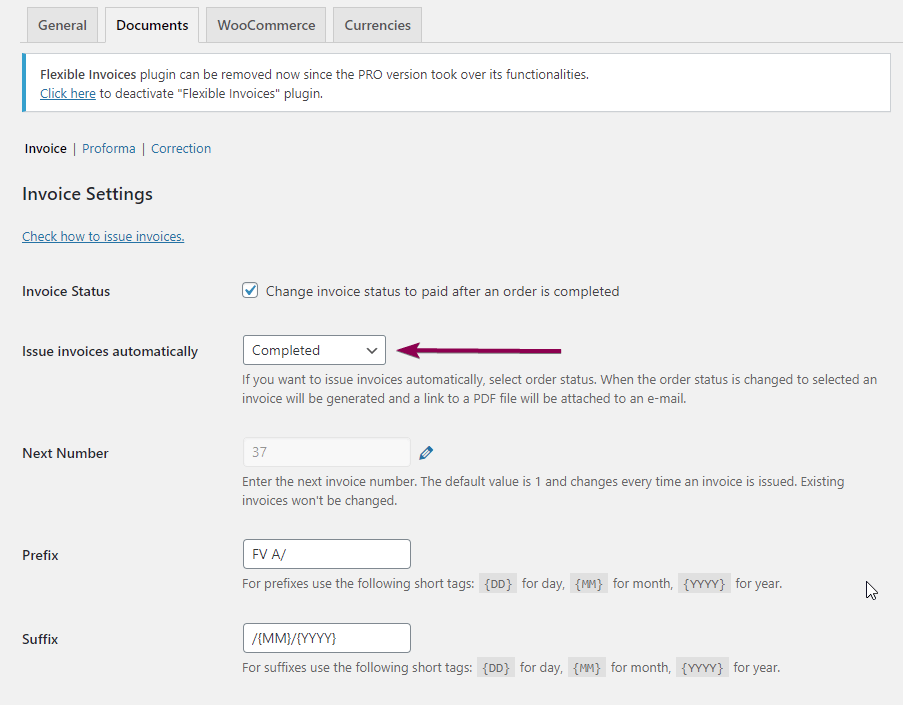
Set it in Invoices > Settings > Invoice by choosing the statuses that trigger a document. Processing is the usual choice, because the payment has arrived.
The automatic invoicing option is part of the PRO version. Read more about automatic invoice processing and about invoice emails in WooCommerce.
For EU sales, see how to set up tax rates in WooCommerce for EU invoices.
Invoicing in other languages
The plugin is translated into English, French, Spanish, Italian, Polish and Dutch, accepts your own translations through .po files, and supports WPML. On a multilingual store the document follows the customer’s language, so a French client receives a facture and a Polish one a faktura from the same shop.
Summary
A manual invoice is four sections: seller, customer, products, payment and dates. Set the seller once in the settings so you never type it again, use Fetch client data for returning customers, and check the tax rate on every line, because it is the one field you cannot type freely. Publish assigns the number, after which the document can still be corrected until it reaches the customer. Inside WooCommerce the same form is prefilled from the order, so issuing is one button, and both routes share one numbering series. When issuing by hand turns into an evening’s work, that is the point to automate it by order status.
You can test the free and PRO versions, and the add-ons, in a free demo store, or check the documentation. Questions go to our support.
Frequently asked questions
Can I issue an invoice in WordPress without WooCommerce?
Yes. The plugin works on a plain WordPress site, which suits sales agreed by email, phone or a contact form. There is no order to read from, so you fill in the customer and product data yourself.
How do I add a service, not a product, to the invoice?
Use the pencil icon next to the product name field and type the name. The search only finds items that exist in WooCommerce, so anything you do not sell as a catalogue product is entered by hand.
Why can I not type the tax rate?
Tax rate is a dropdown filled from the rates defined in the plugin or taken from the WooCommerce tax settings. If the rate you need is not on the list, add it in the settings first.
Can I edit an invoice after publishing it?
Yes, with the Update button, as long as the document has not reached the customer. Once it has been sent, the correct route is a correction document rather than a quiet edit, because the number already belongs to the series.
Where is the VAT number on a manual invoice?
In the customer section, as one of the fields you fill in. The default WooCommerce checkout has no such field, which is why orders from businesses often arrive without it.
How do I download several invoices at once?
Through Invoices → Download, which exports a chosen date range in bulk. This is the usual way to hand a month over to accounting.
Is the free version enough for manual invoicing?
Yes. Issuing by hand, in WordPress and for WooCommerce orders, downloading in bulk, and sending to the customer are all in the free version. Automatic issuing on order status, proforma and correction documents are PRO.
Does the invoice number continue across manual and order invoices?
Yes. Both go into the same series, so a document issued from an order and one created by hand never share a number.
