


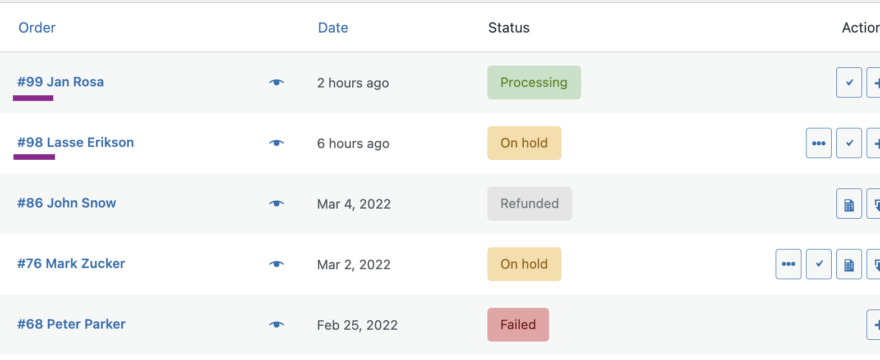

Enable Sequential Order Numbers in the free Flexible Invoices plugin, then set your next invoice number to match the next order number and switch off the annual numbering reset. From that point the order and the invoice carry the same number, so an order found in the shop is the same document the accountant is holding. The pairing holds only under three conditions, and if your store breaks any of them the two sequences drift apart within weeks. Those conditions, and the case against pairing at all, are below.
Go to the paragraph that interests you most:
- How WooCommerce numbers orders by default
- How to turn on sequential order numbers
- How to pair order numbers with invoice numbers
- Three conditions that keep the pairing true
- When pairing is the wrong choice
- Frequently asked questions
How WooCommerce numbers orders by default
Order numbers in WooCommerce are not random, which is worth stating plainly because the gaps make them look that way. An order takes the next ID from a counter that WordPress shares across posts, pages, media, products and revisions, so every draft page and every uploaded image consumes a number that an order might otherwise have had. The sequence is in order, just full of holes: 1043, then 1051, then 1078.
WooCommerce does not offer a setting for this, and for most stores that is a reasonable default rather than an oversight. It becomes a problem once someone has to reconcile orders against invoices or count sales from the numbers.
Stores on HPOS are in the same position. High Performance Order Storage moved orders out of the shared posts table, which runs on 34.4% of the 19,803 WooCommerce stores in WP Desk telemetry as of August 2026, but order numbers continue from the existing counter rather than restarting, so the gaps you already have stay where they are.
For the longer explanation of why the numbers skip, see WooCommerce order numbers not sequential.
WooCommerce sequential numbers
One free plugin handles it: Flexible PDF Invoices for WooCommerce and WordPress.
After installing and activating it, go to Invoices → Settings → WooCommerce → General and enable Sequential Order Numbers.
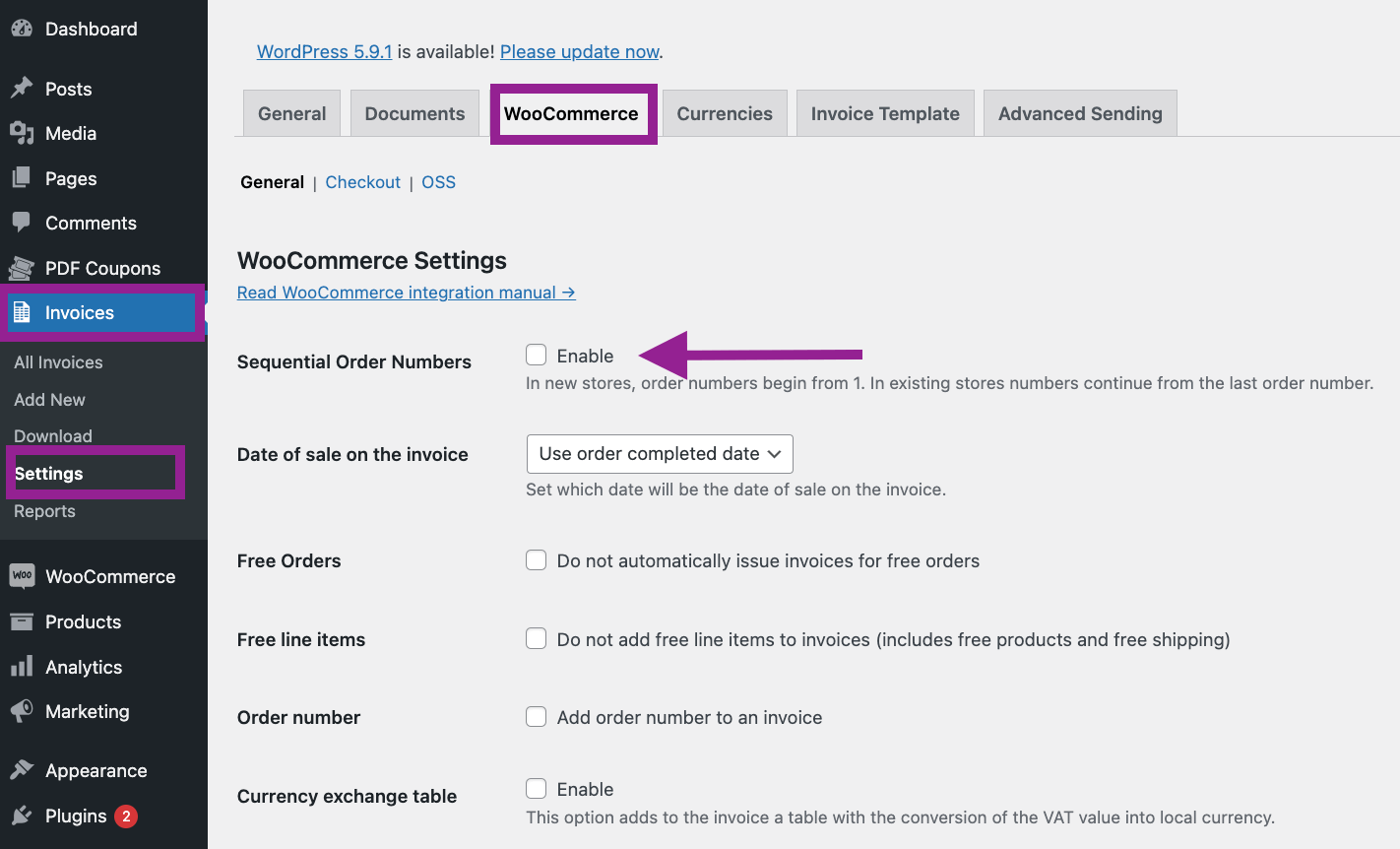
Two things to expect. Numbering does not restart at 1. It continues from your highest existing order number, so a store whose last order was 98 gets 99 next. And existing orders keep the numbers they already have, which means your order list will show the old gapped numbers up to the switch and clean numbers after it. That one-off step is normal and not worth trying to repair.
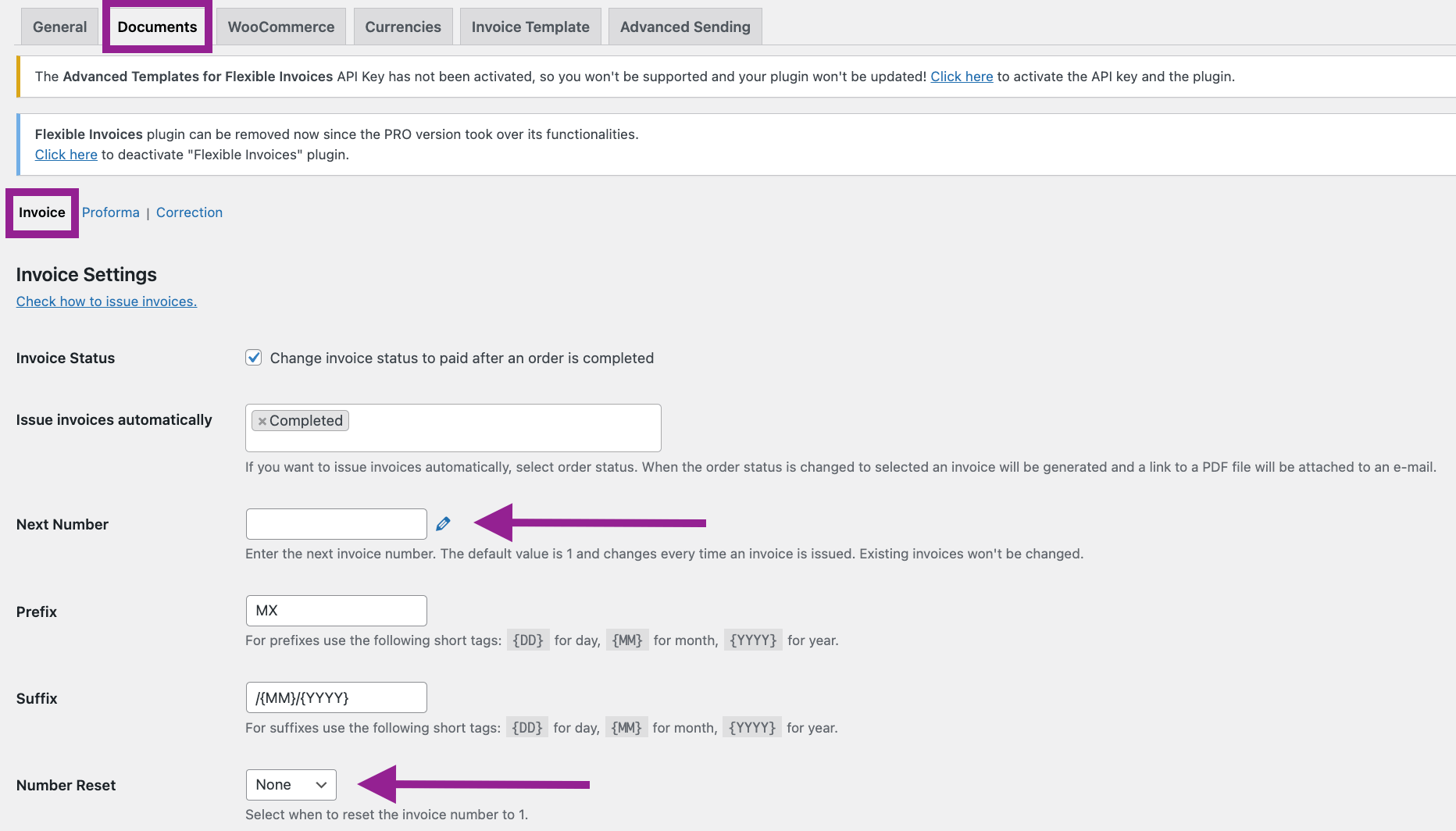
The number the plugin assigns is a display number layered over the database ID, which does not change. Integrations, payment gateways and shipping plugins keep working on the ID underneath.
WooCommerce sequential invoice numbers
With order numbers in sequence, the invoice sequence can be aligned to them.
If the next order number is 99, set the next invoice number to 99 as well, and disable the numbering reset so the invoice sequence does not jump back to 1 later and break the parity. Both settings sit in the document numbering section of the plugin settings:
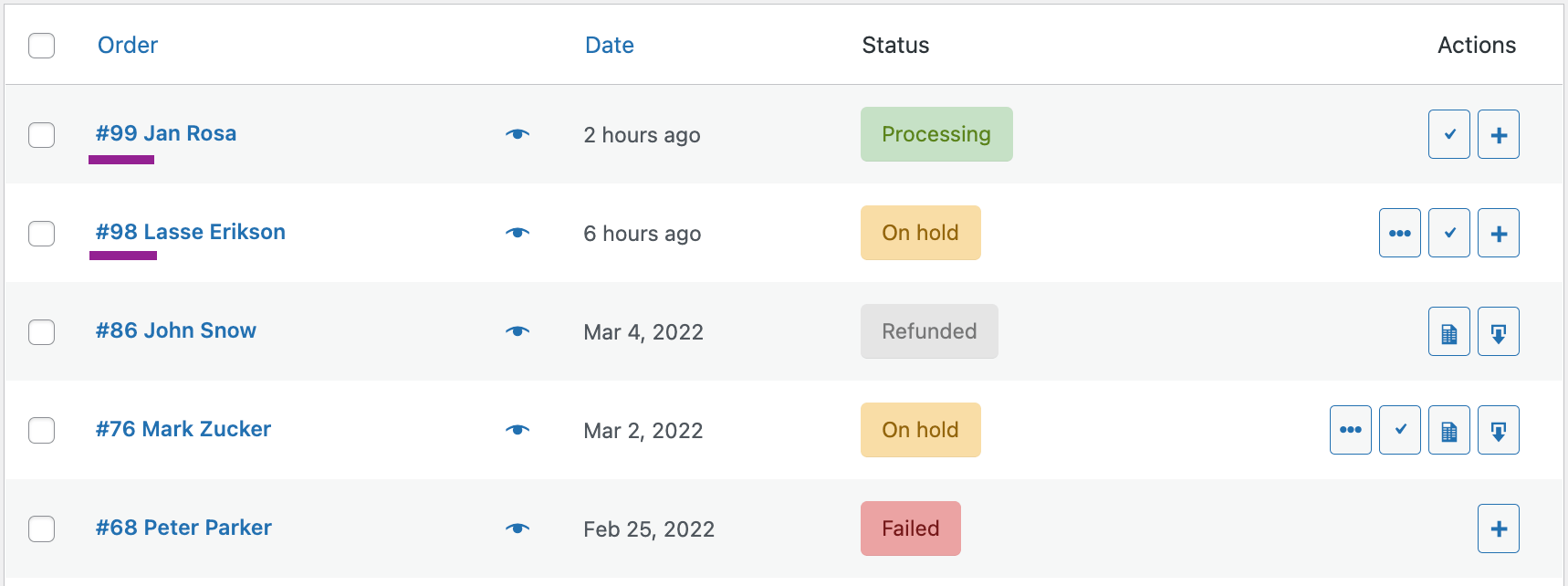
From then on, order 112 carries invoice 112, and nobody has to cross-reference two lists to answer a customer asking about a document.
Three conditions that keep the pairing true
Aligning the two sequences once is easy. Keeping them aligned depends on your store never doing any of the following.
Every order must produce an invoice. If invoices are issued at a status that some orders never reach, those orders consume an order number without consuming an invoice number, and the two counters separate. The gap only grows.
Nothing may be invoiced outside WooCommerce. An invoice issued by hand for a client who paid by transfer takes the next invoice number with no order behind it, which pushes the invoice sequence ahead of the orders by one. A store that invoices services alongside shop sales cannot keep the two aligned at all.
Cancelled and failed orders still count. They take an order number. If they take no invoice, the counters drift again.
| Situation | Effect on the pairing |
|---|---|
| Every order is invoiced automatically | Stays aligned |
| Invoices only at a late status, some orders abandoned | Invoice numbers fall behind |
| Manual invoices issued outside the shop | Invoice numbers run ahead |
| Failed and cancelled orders | Order numbers run ahead |
Proformas and corrections have their own numbering and do not disturb the invoice sequence.
When pairing is the wrong choice
Two reasons not to do it, and neither is obvious at setup.
The annual reset. Many accountants expect invoice numbers to restart each year, with the year in the number, so January’s first document is 1/2027. Pairing requires that reset to stay off, which means a single sequence running across years. Numbering rules differ by country, so this is a question for your accountant before you change the setting, not after the first January.
Trust in a number that silently drifts. A pairing that is 99% correct is more dangerous than no pairing, because staff stop checking. Once the sequences separate, order 340 points at invoice 338 and nobody notices until a customer disputes a document. If your store is in any of the drift situations above, keep the two sequences independent and search by customer or date instead.
Summary
Sequential order numbers are one checkbox in a free plugin, numbering continues from your current highest number rather than restarting, and existing orders are left alone. Pairing them with invoice numbers is worth doing in a store where every order is invoiced automatically and nothing is invoiced outside the shop. Everywhere else the two sequences drift, and the annual numbering reset your accountant may require rules it out regardless. Check the reset question first, then set the next invoice number to the next order number.
Install the free Flexible Invoices for WooCommerce to try it, or see the PRO version with automatic invoicing, three document types and EU VAT handling in a free demo.
Sequential Order and Invoices numbers
With Flexible Invoices PRO
Test free for 30 days → or View DetailsFrequently asked questions
Are WooCommerce order numbers random?
No. They come from a counter WordPress shares with posts, pages, media and products, so they run in order but skip the numbers used by everything else. The gaps are what make them look random.
Will my existing orders be renumbered?
No. Orders placed before you enable the option keep their numbers, and the new sequence applies from the next order onwards. Expect one visible jump in the list.
Where do sequential numbers start?
At your highest existing order number plus one, not at 1. A store whose last order was 98 gets 99.
Does this break payment or shipping integrations?
No. The sequential number is a display number on top of the database ID, which other plugins keep using underneath.
Can the order number and the invoice number be the same?
Yes, by setting the next invoice number to match the next order number and switching off the numbering reset. It stays true only while every order produces exactly one invoice.
Why would the two numbers stop matching?
Orders that never reach the invoicing status, invoices issued manually outside WooCommerce, and cancelled or failed orders each move one counter without moving the other.
Should I disable the annual invoice numbering reset?
Only after asking your accountant. Numbering rules differ by country, and many expect invoices to restart each year with the year in the number, which pairing makes impossible.
Is the sequential order number feature free?
Yes, it is in the free version of Flexible Invoices. Automatic invoicing, proformas, corrections and EU VAT handling are PRO features.
