


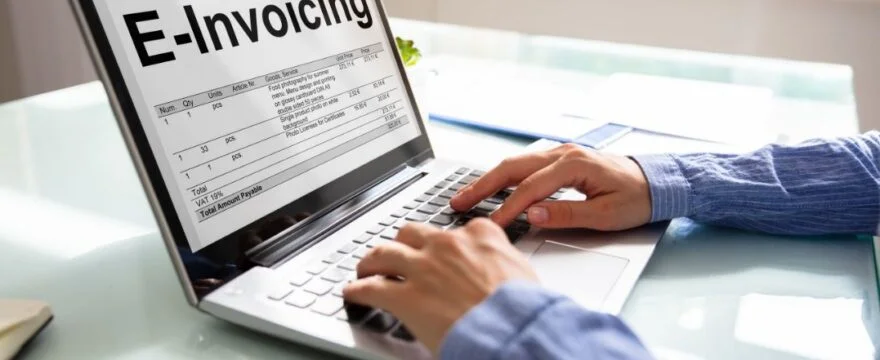

A PDF invoice is a document people read. A structured e-invoice is data machines read, usually XML, built on the European standard EN 16931. For sales to consumers, a PDF is still fine. For B2B sales in countries with an active mandate, the structured file is the legal invoice and the PDF is only a copy. Hybrid formats such as Factur-X and ZUGFeRD are both at once: a PDF with the data embedded inside.
The difference in one table
| PDF invoice | Structured e-invoice | |
| What it is | a visual document | a data file, usually XML |
| Who reads it | a person | accounting software |
| How it travels | email or download | platform, network or provider |
| When it counts as delivered | when the customer receives the email | when the platform or network accepts it |
| Data quality | typos survive unnoticed | missing fields cause rejection |
| Required for B2B in | nowhere, as the legal invoice | Italy, Romania, Belgium, Poland, France, soon Germany |
What does not change
You still issue an invoice for the same sale, with the same numbering, the same VAT rules and the same archiving obligations. Your customers still want something they can look at. Your accountant still wants the whole set at the end of the month.
That is worth saying, because the switch is often described as a revolution. For a small store it is closer to a change of envelope than a change of business.
What does change
- Data becomes strict. A PDF tolerates a company name in the address line and a 0% rate with no explanation. A structured invoice does not: it will be rejected.
- Delivery becomes traceable. You know when the invoice was accepted, and so does the tax administration in clearance countries.
- Corrections follow the same path. A credit note is another structured document, not an email with an apology.
- Someone has to watch rejections. This is the operational change stores underestimate. An invoice that fails validation is not delivered, and silence is not confirmation.
Do you need to switch?
Ask two questions. Do you sell to businesses? Is your country covered by a mandate, and from when? If the answer to both is yes, the switch is not optional and the date is already set. If you sell only to consumers, you can keep PDFs, though better structured data will still save you time.
A sensible middle step for stores that are not yet in scope: clean up the data now. Add a VAT number field, validate it, and give every tax rate a category. That work is identical whichever format you end up sending.
Where Flexible Invoices fits
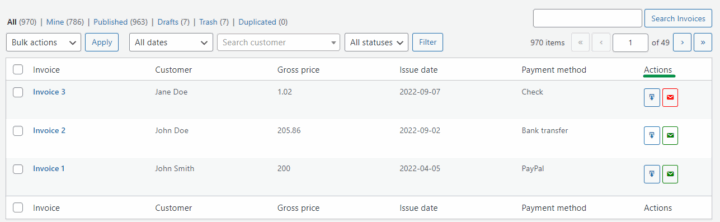
Flexible Invoices generates PDF invoices, proformas and corrections from WooCommerce orders, validates EU VAT numbers in VIES, applies reverse charge and OSS and sends documents automatically. Whatever your country requires next, the invoice data comes from the same place. When you need the structured version, the PEPPOL for Flexible Invoices PRO add-on generates it as a UBL (XML) file in the Peppol standard, downloadable from the invoice edit screen.
Still on PDFs? Start free and upgrade when you need more: Flexible Invoices PRO adds proformas, corrections and automation, and the PEPPOL add-on adds structured output when your country asks for it.
FAQ
- Is a PDF invoice illegal now? No. It stays valid for consumer sales and anywhere without a B2B mandate. In countries with a mandate it is no longer the legal B2B invoice.
- Can I send both? Yes, and most stores do: the structured file for compliance, a PDF copy for the customer’s convenience.
- Is a scanned paper invoice an e-invoice? No. Neither is a PDF. An e-invoice under these rules must be structured data.
- What is a hybrid invoice? A PDF with XML inside, such as Factur-X or ZUGFeRD. People see the document, software reads the data.
- Will my invoices look different? In hybrid formats, no. In pure XML formats, your customer sees whatever their software or the platform renders.
- What should I do first? Fix invoice data: buyer VAT numbers, structured addresses, tax categories with reasons. Everything else builds on that.
